 By Sytech
 10 Oct, 2026
 11 Minutes Read
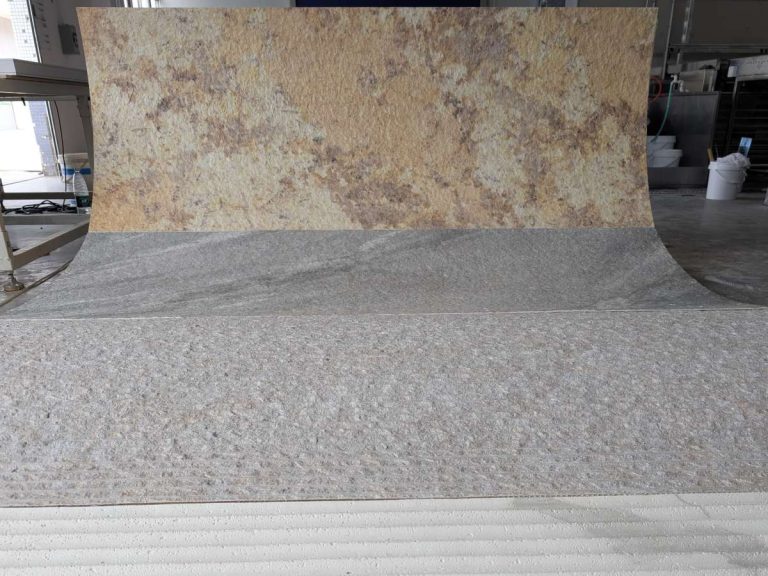
MCM wall panels are a flexible, clay-based composite with a printed decorative surface, installed by direct adhesive bonding without grout. Ceramic tile is a fired, rigid clay body set with grout and often mortar or mechanical anchors. MCM wins on weight, curved-surface installation, and large-format seamless coverage, while ceramic tile still wins in wet-area floors and high-abrasion zones where a hard, impervious fired surface and a proven slip-rated finish matter more than weight savings.
Key takeaways
Search ‘MCM’ online and you will find two completely unrelated things: a design era (Mid-Century Modern) and a material category (Modified Clay Material). This article is about the latter, and the confusion matters because it leads buyers to expect the wrong performance profile.
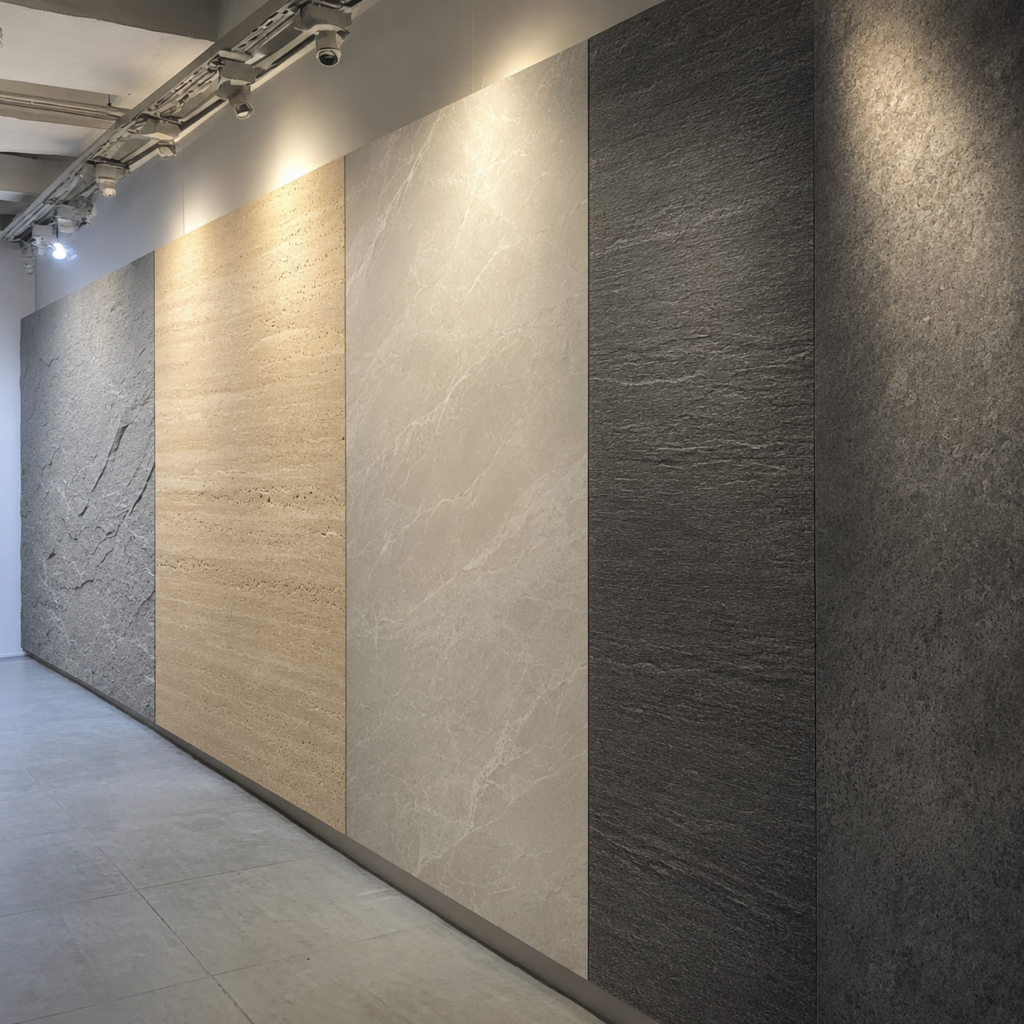
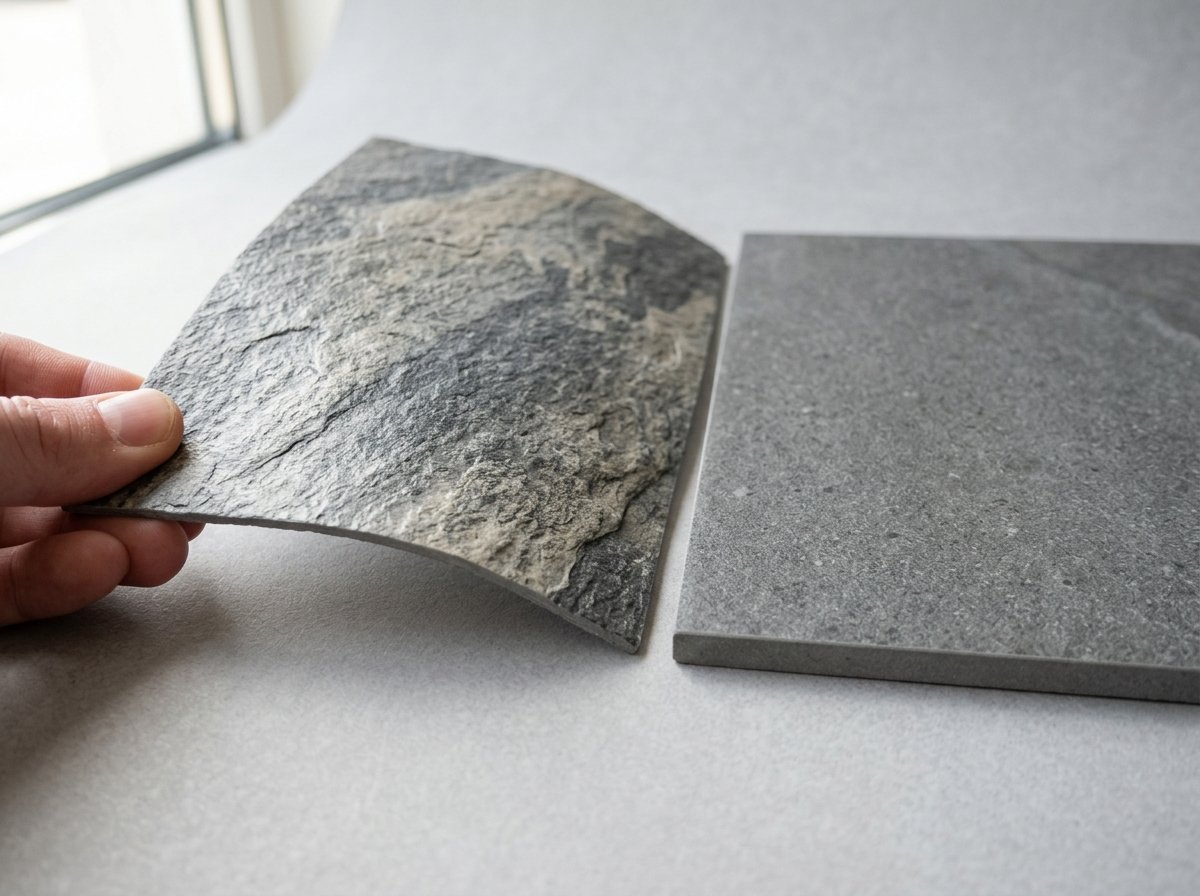
Modified Clay Material is a flexible soft porcelain/clay-based composite substrate. It is not fired rigid porcelain, and it is not a design aesthetic. The decorative surface, whether it mimics travertine, slate, sandstone, or marble, is applied through water-based, non-fired inkjet printing rather than a kiln-fused glaze. Angtai’s in-house printing process follows this same approach: water-based, non-fired inkjet printing that produces stone-look and stone-pattern decorative surfaces.
This also means MCM-based flexible stone-look panels must not be marketed or mistaken for genuine quarried natural stone or thin-cut stone veneer. They are a printed composite alternative, and a reputable supplier will say so plainly rather than let the visual similarity do the talking. If you’re comparing material categories more broadly, see thin stone veneer vs alternatives for where real veneer, MCM, and other cladding options diverge.
Ceramic tile is a fired clay/mineral body with a glaze fused at high temperature. That firing process is what gives tile its rigidity, its dimensional stability, and its fixed shape. It’s a fundamentally different manufacturing path, and that difference drives almost every comparison point below.
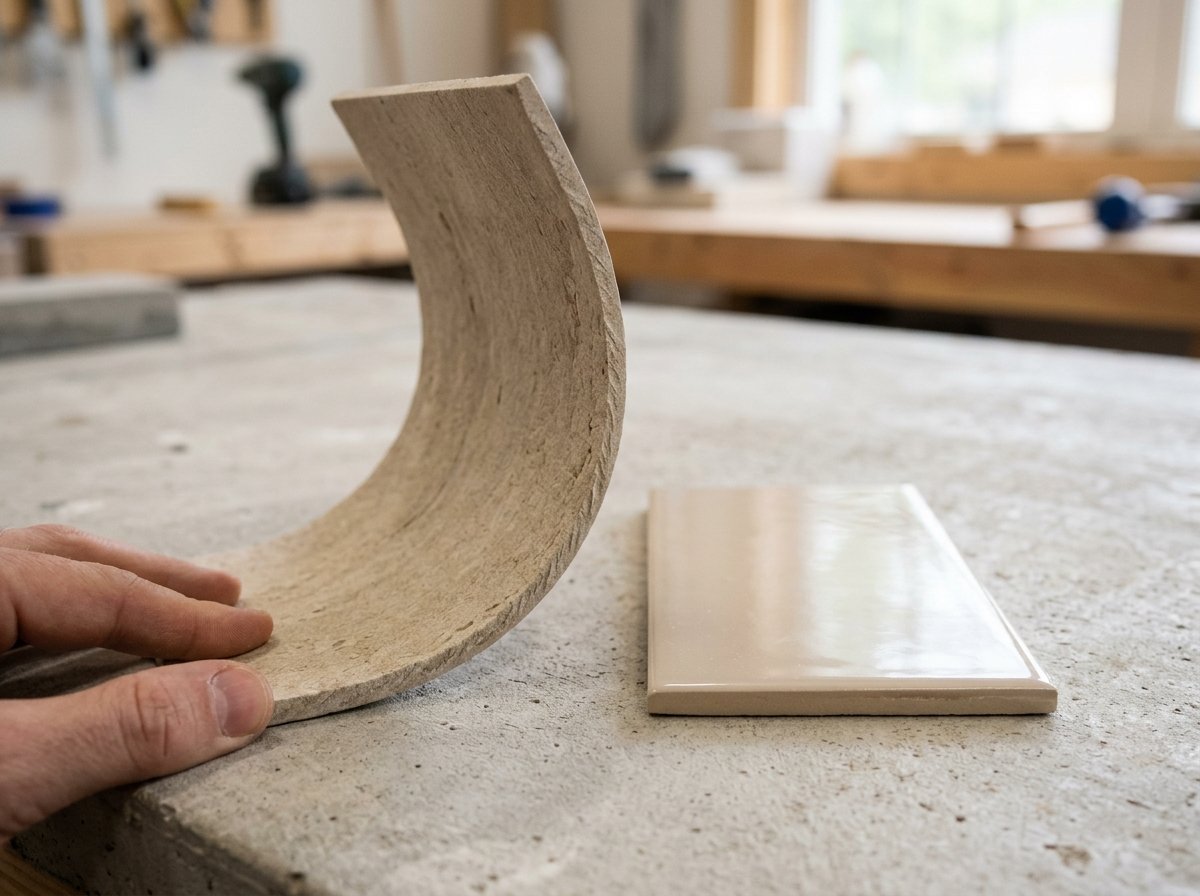
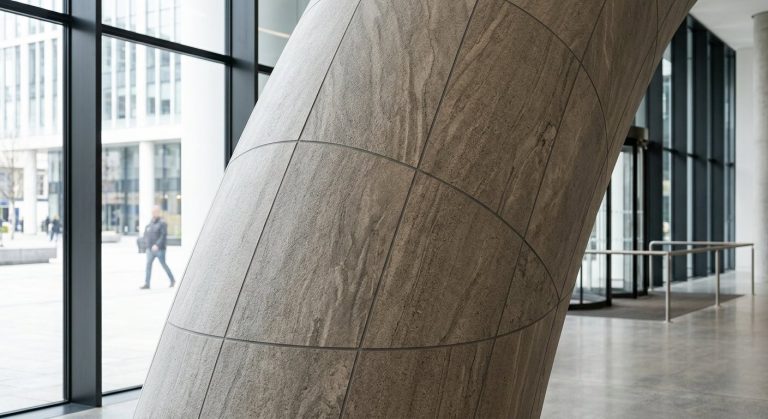
Weight and flexibility are where the two materials part ways structurally, not just visually. A rigid fired ceramic body cannot bend. MCM/soft porcelain substrate can, and that single property unlocks curved-wall and column applications that tile simply cannot do without cutting it into small segmented pieces with extra grout lines.
Standard MCM panel sizes range from 600×1200 mm up to 1200×3000 mm depending on the product line, letting a single continuous sheet cover far more wall area than a tile format limited by kiln size and handling weight. Fewer pieces means fewer joints, which matters for both aesthetics and water management.
| Property | MCM Panel | Ceramic Tile |
|---|---|---|
| Flexibility | Bends to wrap curved substrates | Rigid, flat installation only |
| Format size | Up to 1200×3000 mm, model-dependent | Limited by kiln size and weight |
| Wear rating | Grade 4 internal wear rating (manufacturer-reported) | Varies by PEI/abrasion class |
One caution: exact weight-per-square-meter and flexural strength figures vary by model. Treat generic marketing numbers with skepticism and request the current product spec sheet before finalizing a design. For a broader look at how weight factors into material selection, see lightweight cladding materials: a buyer’s guide.
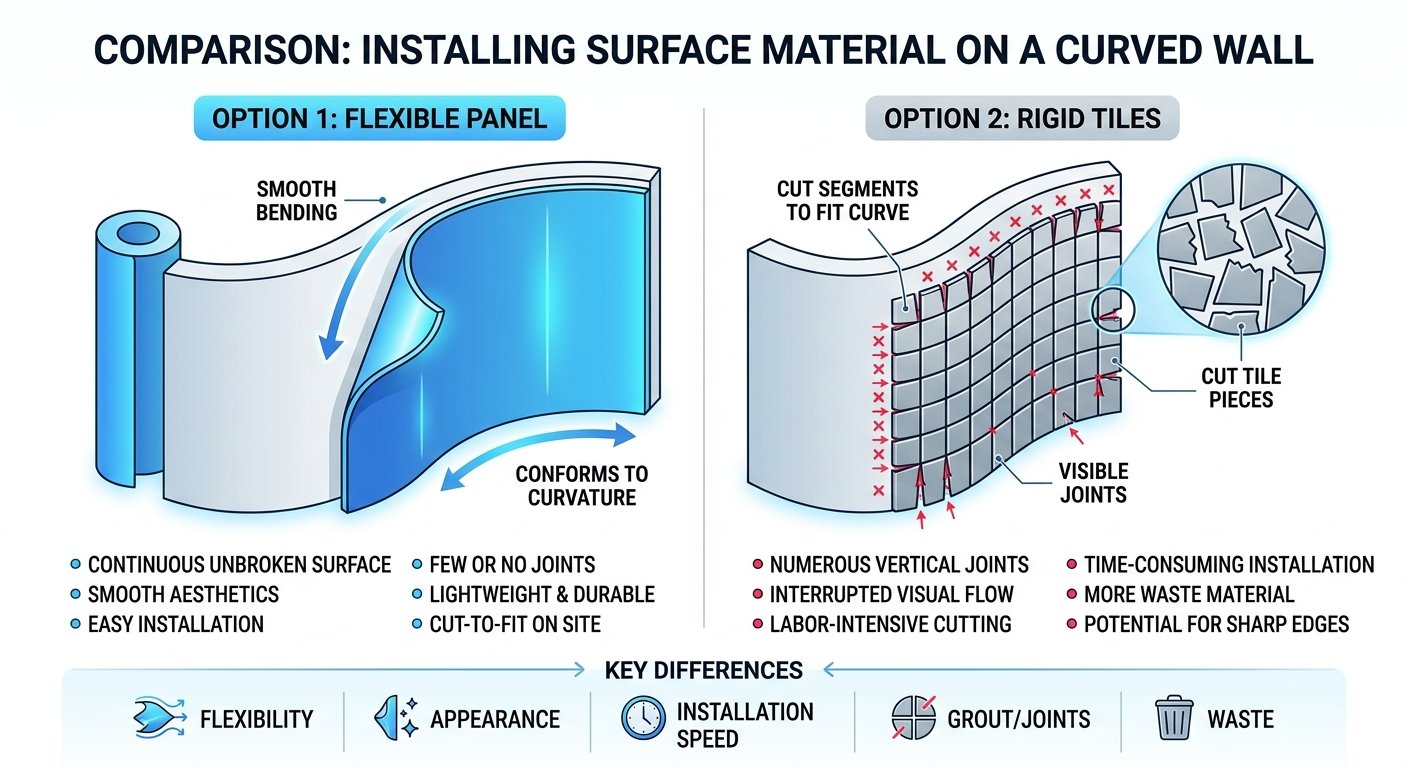
Installation is where the labor hours and long-term maintenance headaches actually get decided, not at the showroom sample wall. Here’s how the two systems differ step by step.
Grout joints are a long-term maintenance point of their own. They stain, they crack when the substrate moves even slightly, and they need periodic resealing. Fewer joints on a large-format MCM installation means fewer water-entry points and less recurring upkeep.
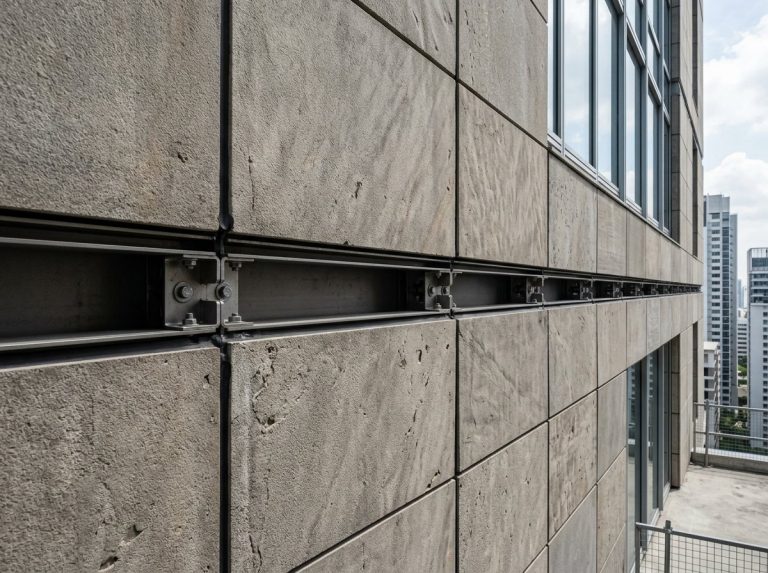
For exterior facade and rainscreen use, adhesive-only systems, substrate type, and mechanical back-up requirements all depend on the specific product and local building code. That’s not a universal claim either way; check the applicable rainscreen system guide and confirm with the manufacturer before specifying an adhesive-only exterior system.
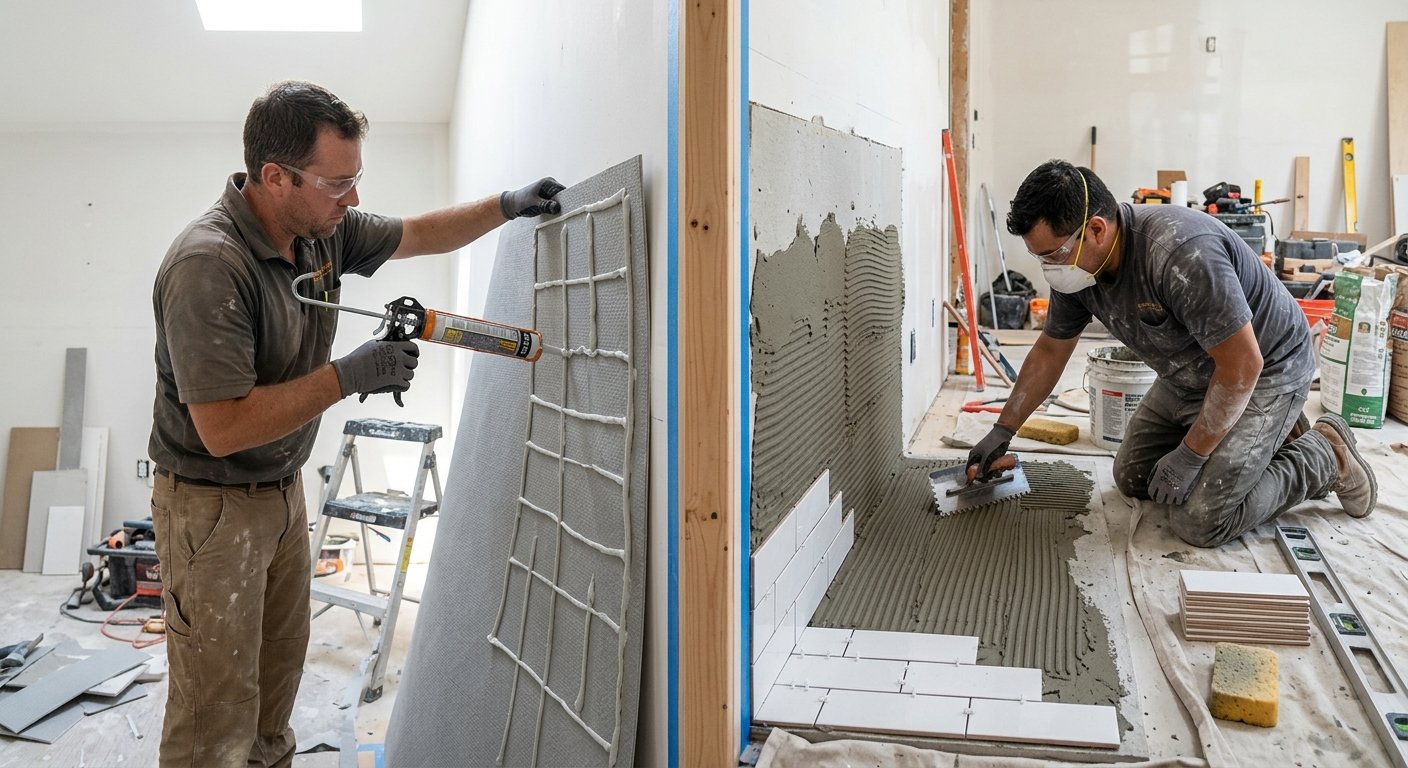
Ceramic tile is a proven material, but it has real failure modes that drive buyers toward alternatives for specific applications.
None of this means tile is a poor material. It means tile is the wrong tool for certain jobs, the same way a rigid substrate is the wrong tool for a curved column.
This article isn’t here to oversell MCM. Some applications genuinely belong to ceramic or porcelain tile, and pretending otherwise would be bad engineering advice.
Both are fired, impervious, hard-wearing surfaces suited to constant water exposure and foot traffic on floors, a role MCM wall panels are not designed to fill. Angtai manufactures flexible MCM stone-look panels for decorative wall cladding, not engineered quartz countertops or structural stone, and that distinction extends to wet floor and submerged applications.
Avoid porous, unglazed, or non-rated tile without a proper waterproofing membrane behind it, regardless of whether it’s ceramic or any other wall material. The membrane and substrate prep matter as much as the surface finish itself.
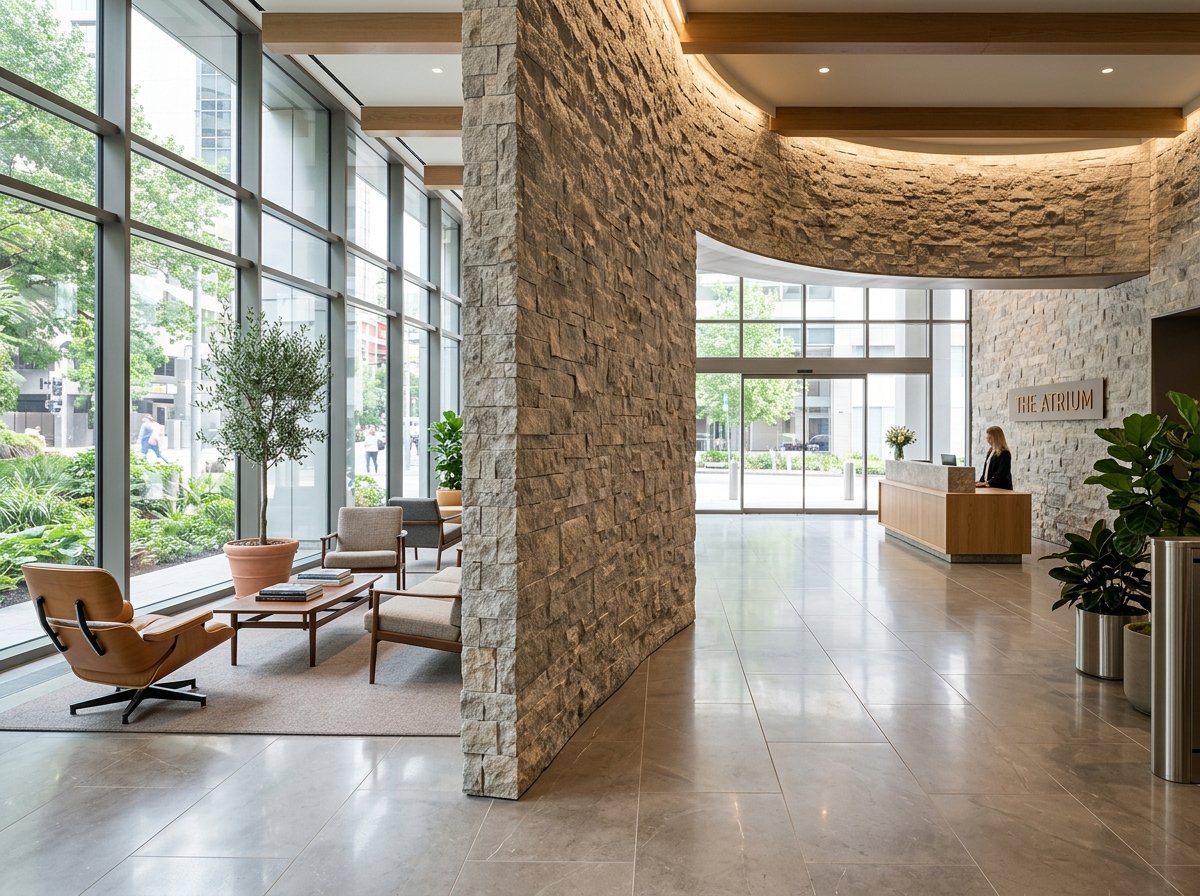
High-abrasion floor zones, think hotel lobbies, corridors, and loading areas, also benefit from ceramic or porcelain tile’s fired hardness and established slip-rating systems. If your project is a wet floor or a foot-traffic-heavy zone, specify tile. If it’s a decorative wall, curved column, or feature surface, that’s where interior stone wall panels and MCM systems start to make more sense.
Durability claims sell panels. Test reports verify them. Procurement teams should insist on the second one before trusting the first.
For context, Angtai’s panels carry a manufacturer-reported test temperature range of -40°C to 150°C and a rain-washable, easy-clean surface, figures that should still be confirmed against the current spec sheet for the specific model you’re buying. If fire classification is a project requirement, review non-combustible wall panels: fire-rated cladding materials compared before assuming any decorative panel meets an assembly-level fire code without documentation.
Material unit price is only one line item. Comparing total installed cost tells a more honest story, and it’s the number procurement teams should actually be tracking.
| Cost Factor | MCM Panel System | Ceramic Tile System |
|---|---|---|
| Substrate prep | Standard wall leveling | Leveling plus movement joint checks |
| Adhesive/mortar | Direct adhesive only | Mortar bed plus grout |
| Labor sequence | Set and done, no cure wait for grout | Set, grout, cure before use |
| Waste from cutting | Lower, large format, fewer cuts | Higher on curves or tight layouts |
| Transport/handling risk | Lighter, still breakage-sensitive | Heavier, higher breakage risk in transit |
Fewer joints and faster adhesive-only installation on MCM panels can reduce labor hours versus a full tile set-and-grout sequence, though exact savings depend on project scope and local labor rates. For large commercial projects, request a landed-cost quote, ex-factory price plus freight, duty, and packaging, rather than comparing raw material price alone. Avoid citing a universal percentage savings figure; costs vary too much by region, project scale, and labor market to generalize. See exterior stone panels cost: prices & what affects them for a deeper breakdown of what drives landed cost on cladding projects.
Run your project through this checklist before locking in a material, not after the order is placed.
If the project is a wet floor or a high-abrasion zone, ceramic or porcelain tile remains the better-specified material, full stop. If the project is a curved wall, large-format feature wall, or decorative facade panel with manageable load and a verified attachment system, MCM panels offer a lighter, faster-installed alternative worth specifying and testing. Either way, always request current product spec sheets, test reports, and samples before finalizing a commercial material order.
ANGTAI is a factory-direct supplier of lightweight flexible stone and soft porcelain wall cladding for interior and exterior projects, with OEM/ODM and customized decorative surface solutions available for private-label or custom-pattern orders. Quotes are typically provided within 24 hours after receiving complete project information, samples usually ship within about 5 business days subject to confirmation, and production lead time runs approximately 25 to 30 days depending on order specifications. If you’re assembling a facade or feature-wall spec, review the complete installation guide and request a current spec sheet to compare directly against your tile alternative.
It depends on total installed cost, not just material price. MCM panels often need less labor time because there’s no grouting or curing wait, and large formats mean less cutting waste. But exact savings vary by project scope, region, and labor rates, so request a landed-cost quote before assuming panels are cheaper.
Ceramic tile cracks under substrate movement, grout lines stain and need resealing, heavy tile adds structural load, large formats are brittle in transit, and rigidity makes it impractical for curved walls without extensive cutting and extra joints.
Both are fired, impervious, hard-wearing surfaces suited to constant water exposure, making either suitable for shower walls when properly installed over a waterproofing membrane. This is a role MCM wall panels are not designed to fill, since they are built for decorative, non-submerged cladding.
Avoid porous, unglazed, or non-rated tile installed without a proper waterproofing membrane behind it. The membrane and substrate prep matter as much as the tile itself; even a good tile will fail in a shower if the waterproofing underneath is inadequate.

13 Oct, 2026
10 Oct, 2026
08 Oct, 2026
18 Sep, 2026
 Guidelines
 Guidelines
 Guidelines
 Guidelines
 Guidelines
 Guidelines