 By Sytech
 13 Oct, 2026
 12 Minutes Read
Flexible stone-look panels (MCM/soft porcelain with inkjet-printed surfaces) and genuine thin-stone veneer are not the same product, and neither is automatically better than traditional natural stone veneer. The right choice depends on weight limits, substrate curvature, fire classification requirements, and whether the project needs a genuine mineral surface or a consistent, lightweight stone appearance. Most comparison articles online blur these three materials into one vague category, which is exactly where procurement decisions go wrong.
Key takeaways
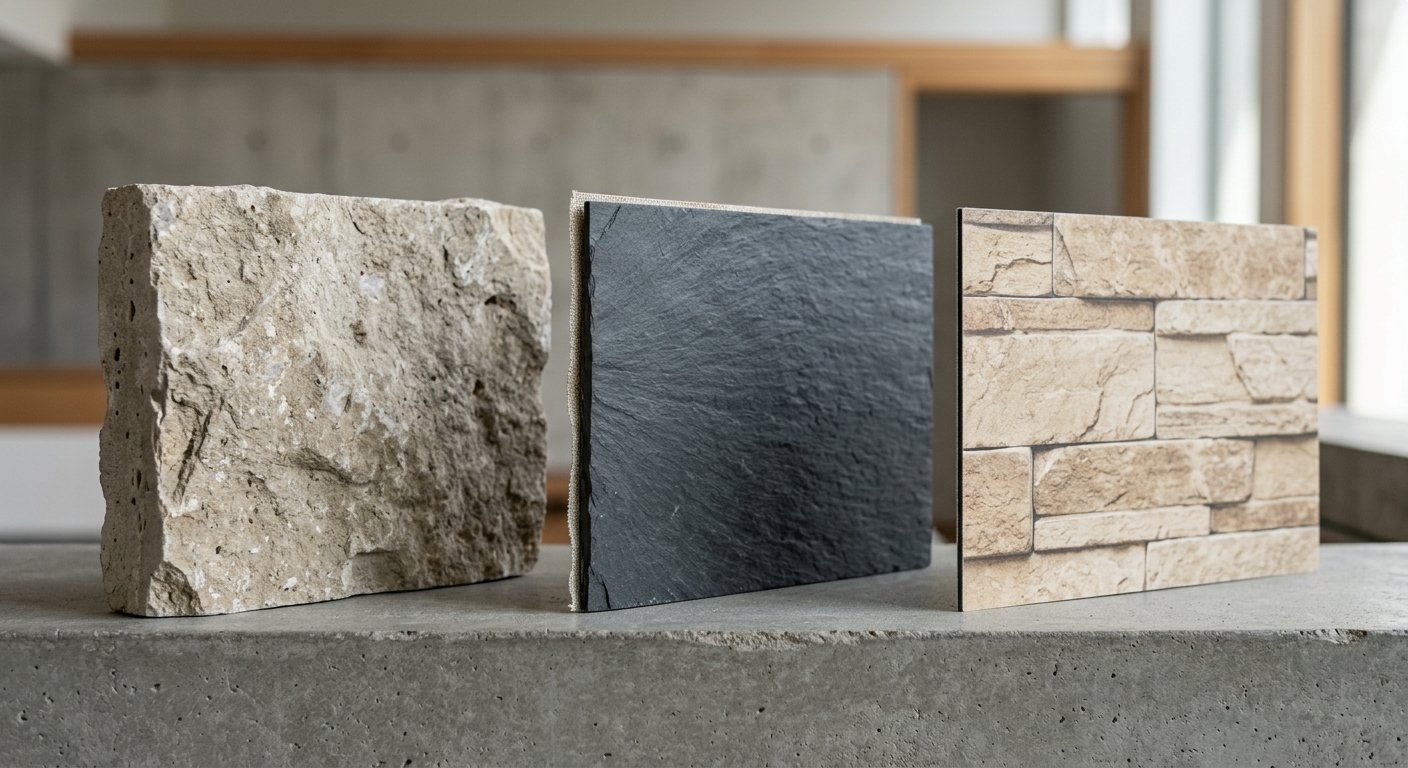
Before you compare anything, separate the category. ‘Flexible stone’ gets used as a marketing umbrella term for three physically different products, and conflating them is how specifications end up mismatched with project requirements.
ANGTAI’s flexible stone-look panels fall into the third category. They must not be represented as quarried natural stone, because the surface origin isn’t mineral, it’s a printed finish on an engineered base. This distinction isn’t academic. Surface origin affects fire behavior, cost structure, and how consistent the appearance stays across a large facade order. If a spec sheet says ‘flexible stone’ without clarifying which of the three it means, ask the supplier directly before quoting a project.
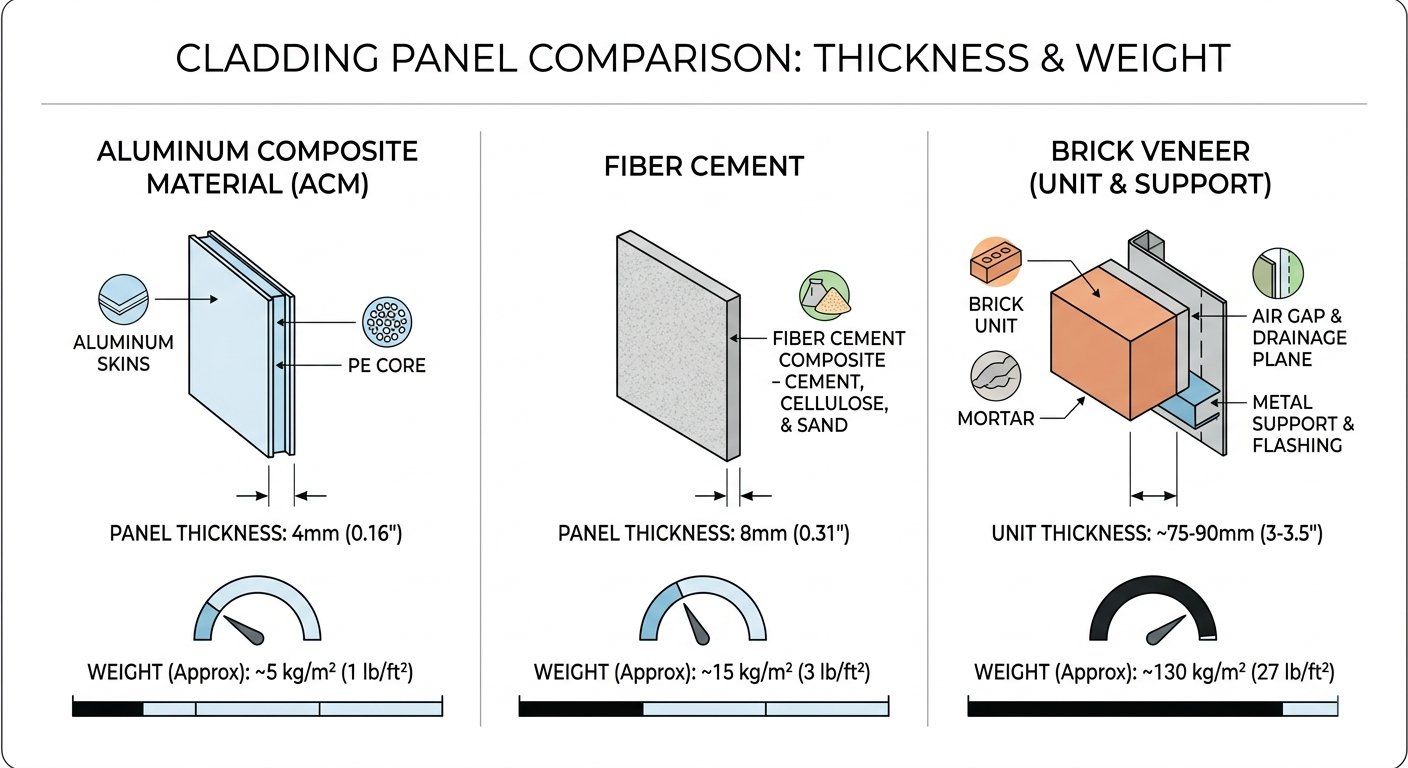
Weight is the single variable that cascades into every other engineering decision: anchor sizing, substrate fastening, transport cost, and load calculations on a high-rise facade. Get the weight class wrong and the rest of the spec falls apart.
| Criteria | Natural Stone Veneer | Genuine Thin-Stone Veneer | MCM/Soft Porcelain Panels |
|---|---|---|---|
| Relative weight per m² | Heaviest, scales with slab thickness | Light, thin mineral layer only | Lightest, flexible engineered substrate |
| Thickness | Substantially thicker than engineered alternatives, with exact dimensions varying by stone type and fabricator | Ultra-thin, model-specific | Model-specific, confirm datasheet |
| Bend radius / curved wall use | Rigid, requires custom fabrication | Flexible within product limits | Flexible within product limits |
Natural stone veneer, even cut thin, carries enough mass that curtain wall anchors and substrate fastening need to be sized for it, which also drives up shipping cost on export projects. Genuine thin-stone veneer and MCM panels reduce that load significantly because the backing is engineered rather than solid mineral.
Exact weight and thickness are model-specific for any flexible panel line and should always be confirmed against current product datasheets before specifying. Standard panel sizes for lightweight stone-look products typically range from 600×1200 mm up to 1200×3000 mm, varying by product line. For reference, ANGTAI’s Orange Sunsetcave Shadow model (01FT70130) ships in 1200×2400mm, 1200×3000mm, 600×1200mm, 600×2400mm, and 600×3000mm formats, which gives a sense of how coverage and joint layout can be planned around larger format panels.
Here’s a common procurement mistake: reading a panel’s fire or water test result as if it certifies the entire wall assembly. It doesn’t. Standards like NFPA 285 and ASTM E136 relate to wall assemblies, tested as a complete system, not isolated material samples.
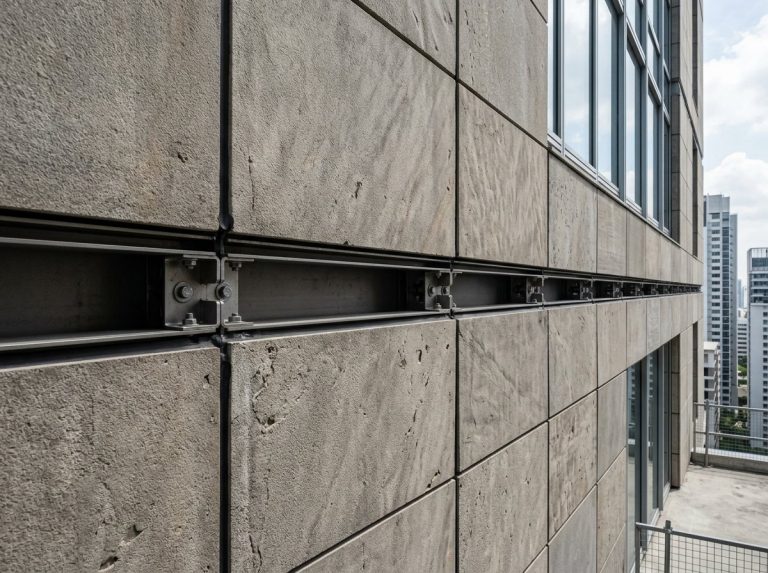
Exterior and rainscreen suitability always depends on the full system: substrate, attachment method, and local building code, not the panel in isolation. Any supplier, including ANGTAI, should be asked for assembly-level documentation if that’s what the project requires, not just a material datasheet.
ANGTAI reports panel-level figures that are useful for material selection but are not substitutes for assembly fire certification: a Grade 4 internal wear rating, a tested temperature tolerance range of -40°C to 150°C, and a rain-washable, easy-clean surface. These are manufacturer-reported material properties, not certified assembly test results, and they should be confirmed with current test reports before specification.
Natural stone’s fire and water behavior is well documented by comparison. Stone is inherently non-combustible as a material, and water absorption rates are quarry-specific, meaning they vary by stone type rather than being a universal figure you can quote across all natural stone veneer.
One more flag: colorfastness and UV resistance claims for any printed surface should be backed by project-specific test reports. Nobody should state a guaranteed multi-decade colorfastness period without that documentation in hand, and readers evaluating any supplier’s claims should ask the same question.
Weight also determines how the panel is attached to the wall. That difference matters most on curved surfaces, where mechanical fixing gets complicated fast.
Natural stone veneer slabs typically need mechanical anchoring or thick-bed mortar systems because of their mass, which limits practical use on curved walls without custom fabrication for every piece. That’s expensive and slow.
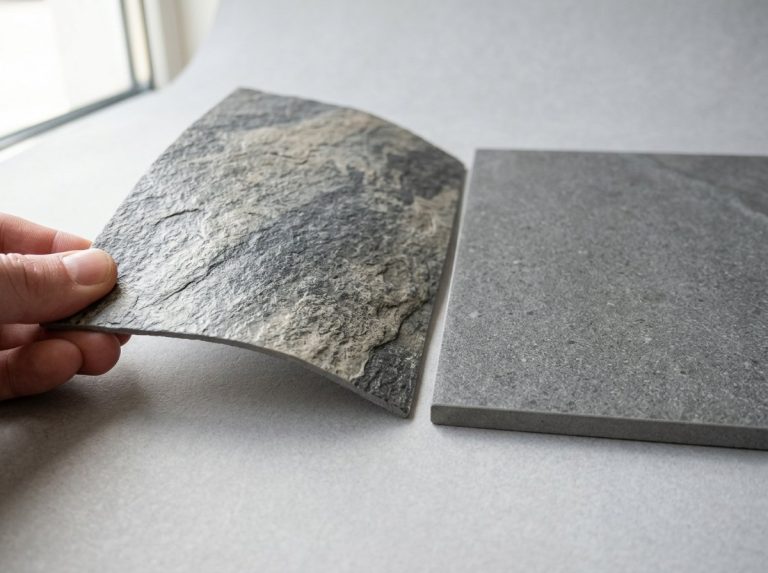
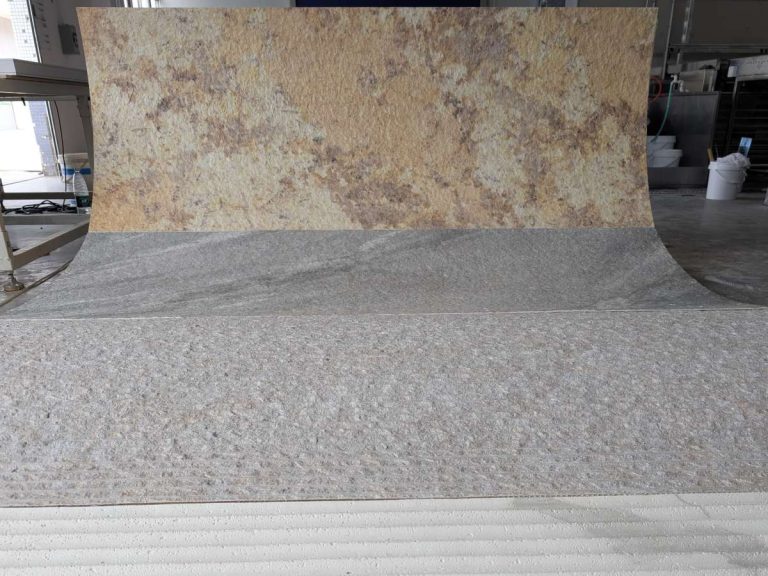
Genuine thin-stone veneer and MCM/soft porcelain panels generally install with direct adhesive pasting onto a prepared substrate, which simplifies curved columns and tight-radius walls considerably. ANGTAI panels, for instance, are installed using direct adhesive pasting rather than mechanical anchoring.
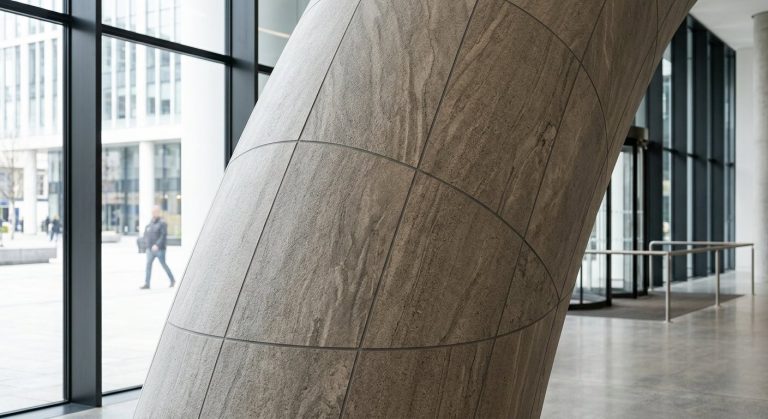
Don’t assume lightweight means forgiving, though. Substrate flatness, moisture content, and adhesive compatibility still determine bond failure risk regardless of how light the panel is. A poorly prepped substrate under a lightweight panel fails just as surely as one under heavy stone, just for different reasons. Curved-wall feasibility is really a panel-design question as much as an installation-method question: bend radius capability has to match the actual curvature of the wall, not just a general claim of ‘flexibility.’ For a deeper look at what goes wrong when weight and substrate prep are mismatched, see why heavy cladding fails on high-rise facades. For curved applications specifically, review curved wall cladding with flexible stone panels.
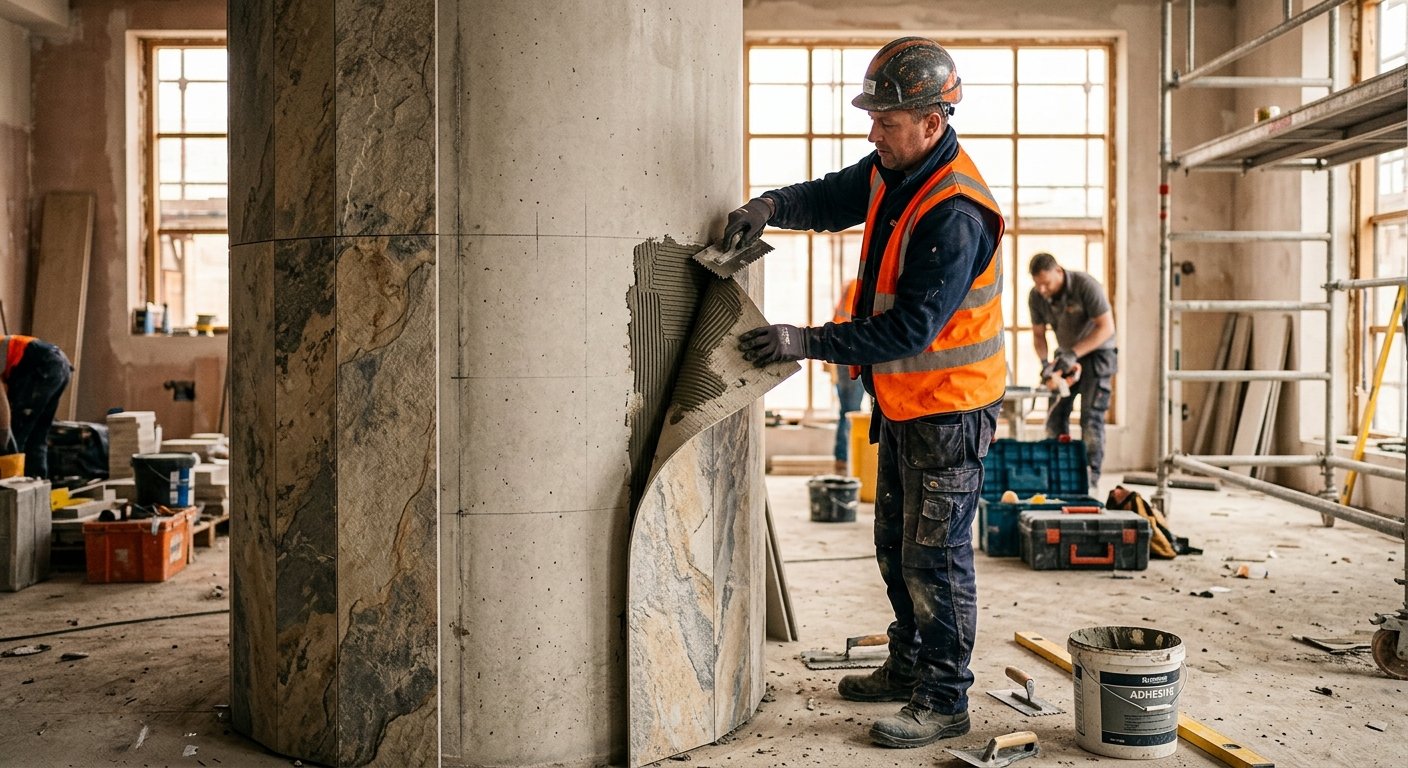
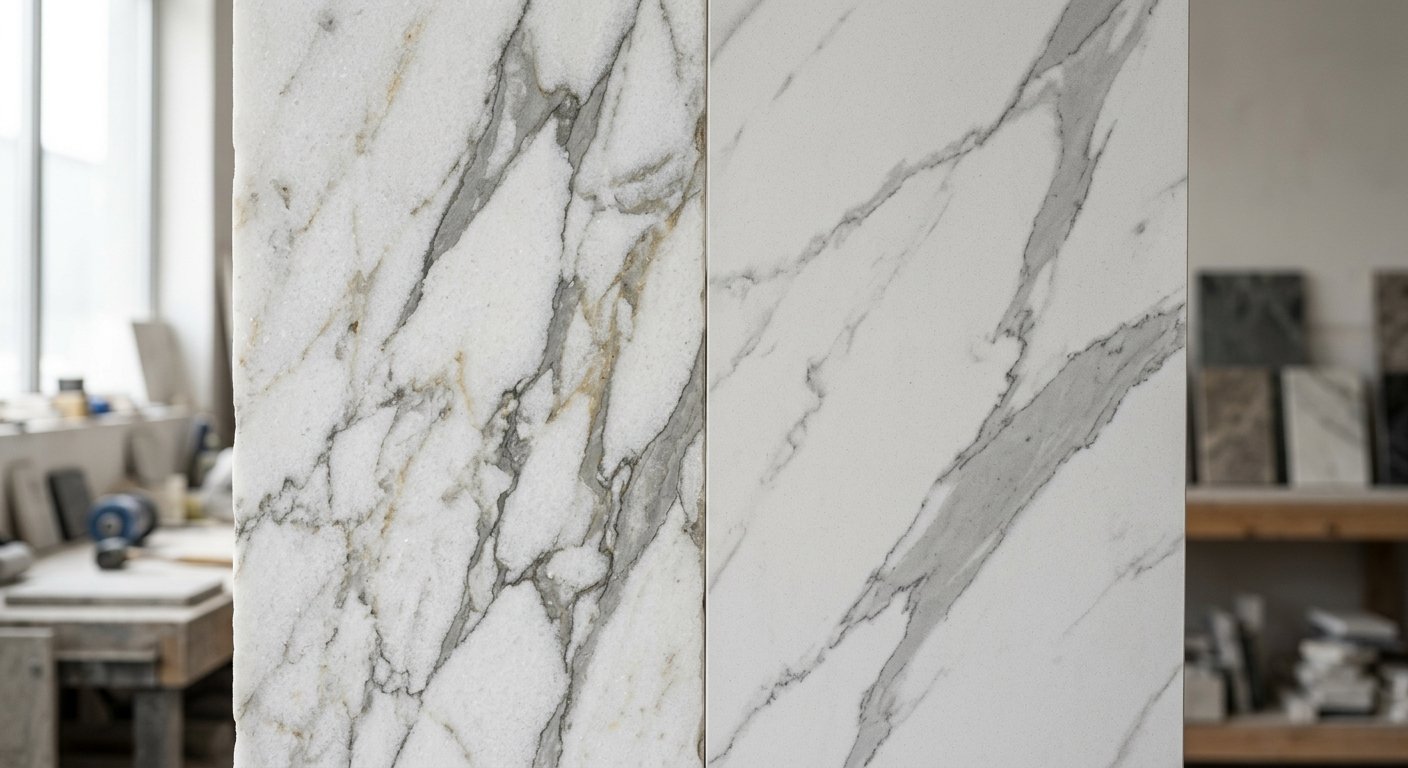
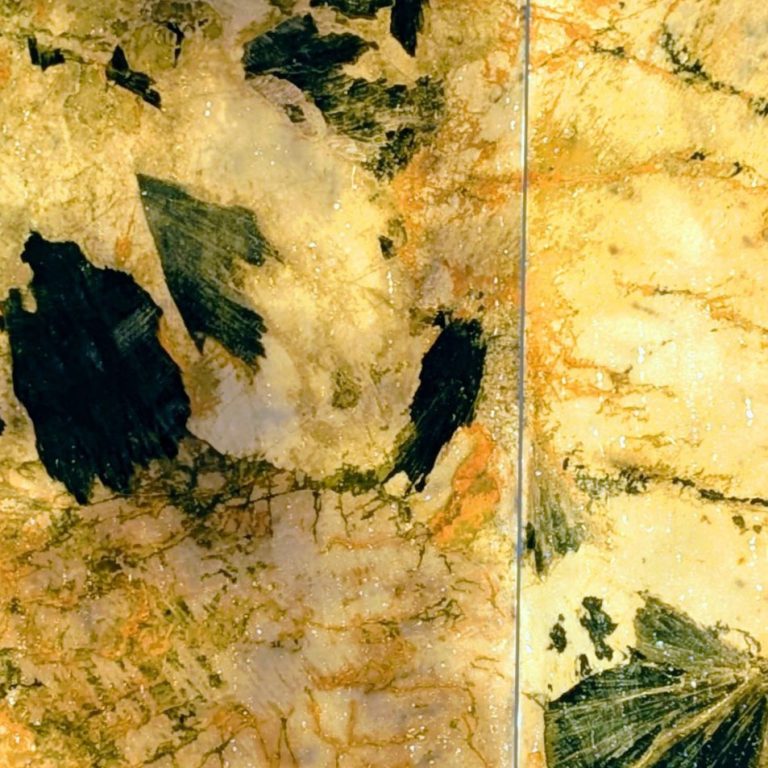
Genuine thin-stone veneer wins on authenticity by definition: it is real stone, so veining, mineral variation, and surface texture are inherently natural, with zero risk of a visible repeat pattern across a wall.
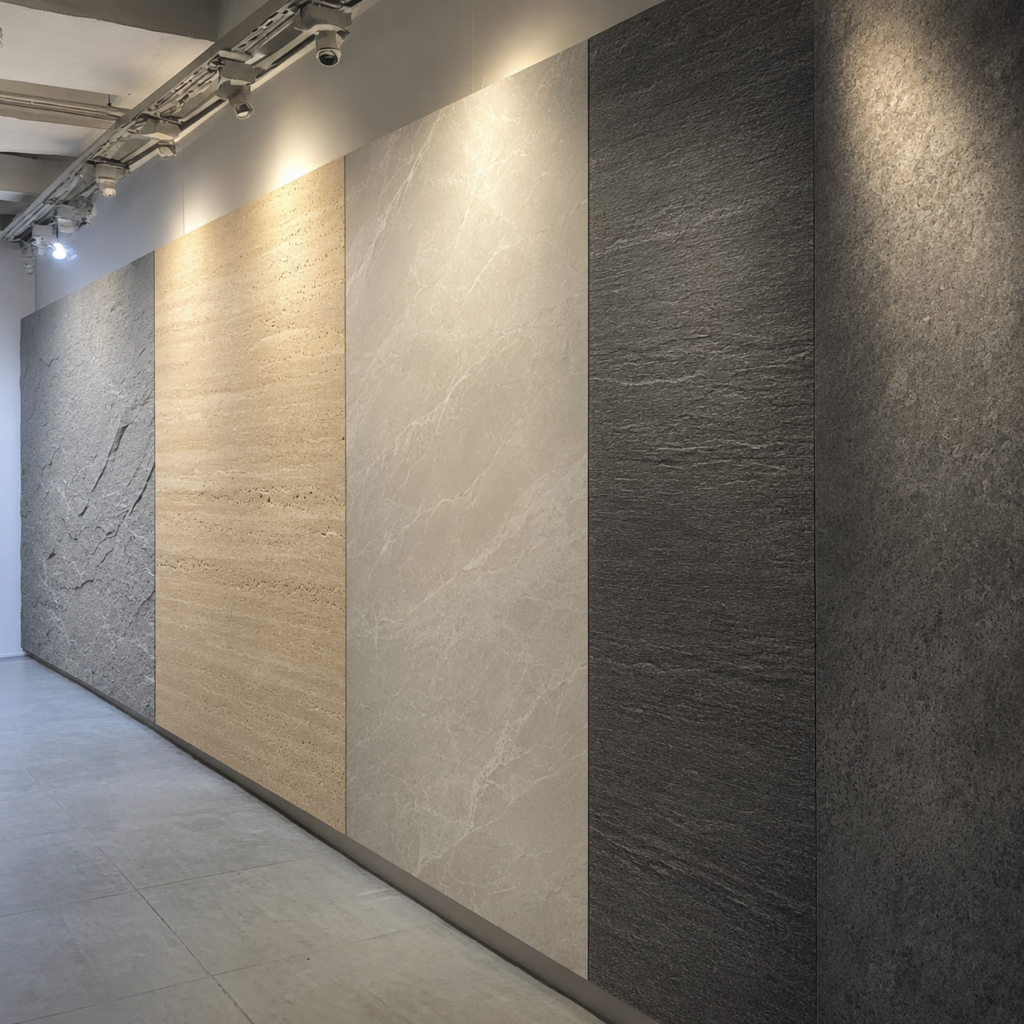
MCM/soft porcelain inkjet-printed panels can closely replicate marble, slate, sandstone, and travertine visuals, with finish options also extending into textured, smooth, luminous, and foamed ceramic surfaces. The practical advantage is batch-to-batch color consistency that quarried stone simply can’t guarantee. Natural stone from the same quarry still varies slab to slab.
That consistency cuts both ways. On a large commercial facade needing uniform color matching across dozens of panels, printed consistency is genuinely useful; it avoids the patchwork look that can happen when natural stone batches don’t match. But on a project where the client specifically wants one-of-a-kind natural variation as a design feature, a printed surface can’t deliver that, because it’s a decorative layer, not mineral veining.
Note: luminous finish options should never be described as transparent or light-transmitting unless verified for that specific product. Any ‘looks like real stone’ claim, from any supplier, should be evaluated against physical samples before specification, not judged from photos alone. Lighting, gloss level, and scale all change how a printed surface reads in person.
Flexible panels aren’t the right answer for every project, and pretending otherwise is how procurement teams end up with compliance headaches down the line. Here’s where natural stone veneer should stay the default choice:
Specifying the wrong material category for the wrong reason creates downstream problems: failed inspections, client expectation mismatches, and rework costs that dwarf any material savings upfront.
Comparing per-m² material price alone is how budget estimates go wrong. Total installed cost is what actually matters, and it’s built from several line items that natural stone and lightweight panels handle very differently.
| Cost Factor | Natural Stone Veneer | Flexible/MCM Panels |
|---|---|---|
| Freight cost | Scales directly with weight, significant for Middle East/SE Asia exports | Lower, lightweight substrate reduces shipping cost |
| Labor/installation | Slower, mechanical anchoring or thick-bed mortar | Faster, direct adhesive bonding |
| Maintenance | Periodic sealing, depends on stone porosity | Rain-washable, easy-clean surface |
Freight is often the overlooked line item. Heavier natural stone slabs cost noticeably more to ship internationally, which matters a lot on export projects bound for the Middle East or Southeast Asia. Labor also differs: direct adhesive bonding of lightweight panels is typically faster than mechanical anchoring of heavy stone, which reduces on-site labor hours and project timeline risk.
Maintenance cost is a longer-term factor worth budgeting for. Rain-washable printed surfaces require less ongoing upkeep than natural stone, which may need periodic sealing depending on the specific stone’s porosity. None of this replaces getting an actual quote, since costs vary by project scope, panel line, and region. ANGTAI typically provides quotations within 24 hours after receiving complete project information, which shortens the cost-comparison cycle for procurement teams evaluating multiple material options. See current cost drivers on the flexible stone price and cost factors page and the thin stone veneer cost guide for a side-by-side reference.
Use this checklist when writing a spec or RFQ so the material category question gets settled before quotes come in, not after installation starts:
Request current test reports and datasheets rather than relying on general marketing language from any supplier, ANGTAI included. For the technical background on how MCM and soft porcelain substrates are built, see what is Modified Clay Material (MCM) and soft porcelain series, sizes, and specs.
If flexible stone-look panels fit your project after running this checklist, ANGTAI offers OEM/ODM and customized decorative surface solutions, with sample dispatch generally available within approximately 5 business days and typical production lead time of 25-30 days depending on order specifications. Free samples ship after price confirmation, with the buyer covering express shipping. Reach out with project details to get sample access and a current spec sheet before committing to a full order.
Genuine thin-stone veneer is real stone, so it inherently looks like natural stone with true mineral veining. MCM or soft porcelain panels use inkjet-printed surfaces that closely replicate stone visuals but are a decorative layer, not mineral material. Always confirm appearance with a physical sample, not a photo.
Genuine thin-stone veneer looks the most realistic by definition since it is actual quarried stone on a flexible backing. High-quality inkjet-printed MCM or soft porcelain panels can closely approximate stone visuals and offer more consistent color matching across large orders, but they are a printed finish, not mineral material.
Durability depends on the specific product and application. ANGTAI reports panel-level figures such as a Grade 4 wear rating and tolerance from -40°C to 150°C, but these are material-level data points. Exterior durability and assembly-level fire or weather performance should be confirmed with current test documentation for the exact installation.
Natural stone veneer categories generally include full-thickness cut stone slabs, genuine thin-stone veneer bonded to flexible fiberglass or polymer backing, and manufactured/cultured stone veneer made from cement-based mixes. Each differs in weight, installation method, and whether the surface is quarried mineral or an engineered composite.

13 Oct, 2026
10 Oct, 2026
08 Oct, 2026
18 Sep, 2026
 Guidelines
 Guidelines
 Guidelines
 Guidelines
 Guidelines
 Guidelines